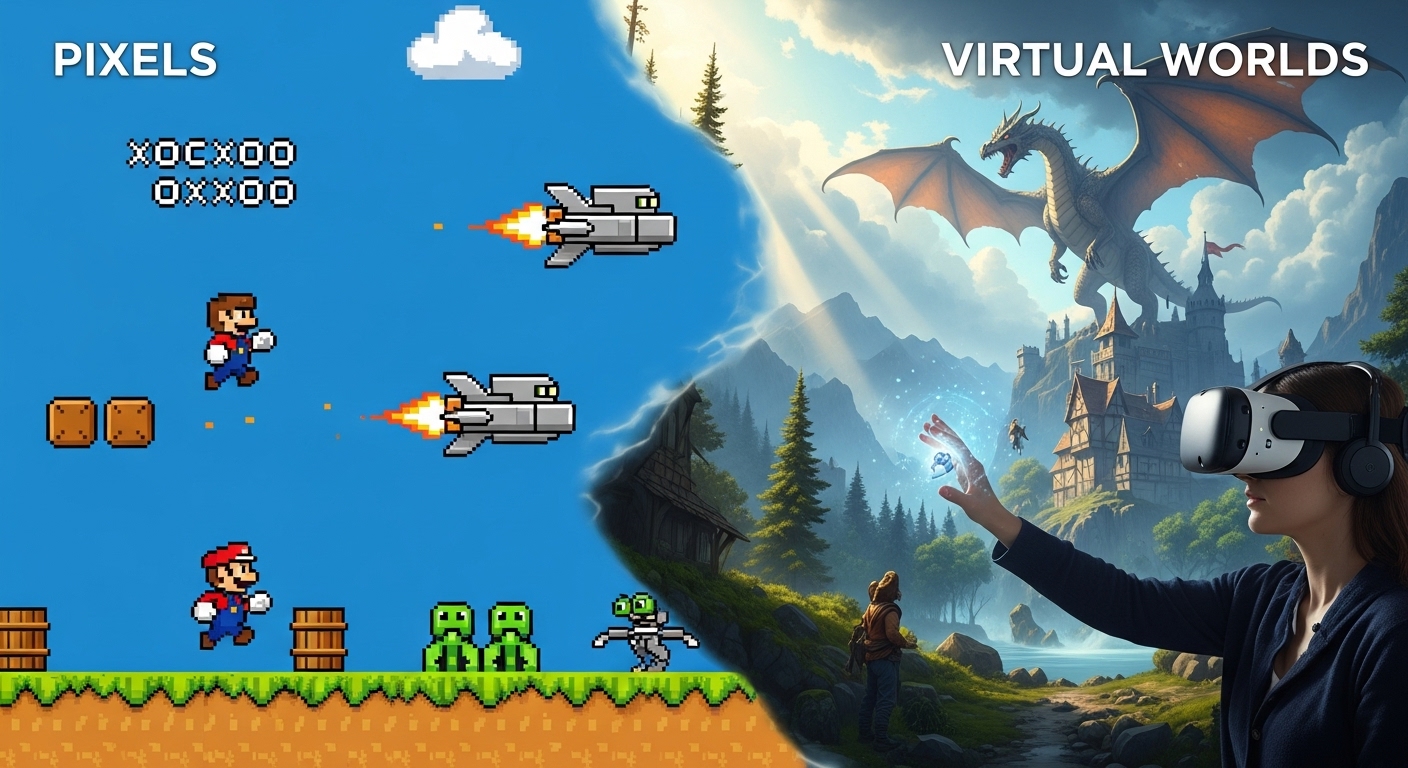
Gaming has grown from simple pixelated adventures into vast digital worlds that blur the line between reality and imagination. What was once considered a niche hobby has now become one of the most dominant forms of entertainment in the world. The journey of gaming is one filled with creativity, technological innovation, and a constantly expanding community. In this post, we will explore how gaming has evolved, the cultures it has inspired, and the impact it has had on our society today.
The Birth of Gaming: A New Frontier of Entertainment
The story of gaming begins in the early 1970s, when arcade machines like Pong and Space Invaders captured the world’s attention. These early games were simple in design, but they represented something revolutionary — the idea that machines could provide interactive entertainment. Players were no longer just watching; they were participating.
Arcades became social hubs where friends would gather, exchange tokens, and compete for high scores. The thrill of seeing your initials on a leaderboard was an early glimpse of gaming’s competitive spirit. Though limited by technology, these games established the core elements of what would become a massive global industry: fun, challenge, and the desire to improve.
By the late 1970s and early 1980s, home consoles like the Atari 2600 brought gaming into living rooms. Suddenly, players didn’t have to go to arcades to enjoy interactive entertainment. Games such as Pac-Man, Donkey Kong, and Space Invaders became cultural icons. The gaming industry had found its footing, and its potential seemed limitless.
The Rise, Fall, and Rebirth of Consoles
The 1980s were both a golden age and a period of crisis for the gaming world. The success of home consoles led to a flood of low-quality games, resulting in the infamous video game crash of 1983. Consumers lost faith, and the industry seemed on the brink of collapse.
Then, something remarkable happened. In 1985, a small Japanese company named Nintendo released the Nintendo Entertainment System (NES) in North America. With its high-quality games, strict licensing system, and beloved characters like Mario and Zelda, Nintendo revitalized the market. Gaming was back — and it was better than ever.
Nintendo’s success inspired competitors like Sega, leading to the legendary console wars of the 1990s. Sonic the Hedgehog faced off against Super Mario, and players around the world took sides. The competition drove innovation: better graphics, more complex gameplay, and the first steps toward storytelling in games.
The 3D Revolution and the Birth of Modern Gaming
The mid-1990s marked another major turning point. With the introduction of 3D graphics, games transitioned from flat, two-dimensional experiences into fully realized worlds. Titles like Super Mario 64, Tomb Raider, and Final Fantasy VII changed the way developers and players viewed games. For the first time, players could explore expansive environments, interact with complex characters, and experience emotional storytelling.
Sony’s PlayStation, released in 1994, became a defining console of this era. Its use of CD-ROMs allowed for larger games with higher-quality music and cutscenes. The PlayStation’s success cemented gaming as mainstream entertainment, no longer just for children but for audiences of all ages.
At the same time, the PC gaming scene began to thrive. Games like Doom, Quake, and StarCraft demonstrated the power of computers to deliver fast-paced, competitive, and technically advanced experiences. Modding communities began to form, allowing players to create their own content and extend the lifespan of their favorite titles.
The Online Era: Connecting Players Across the Globe
With the rise of the internet in the late 1990s and early 2000s, gaming underwent its next evolution. Multiplayer gaming was no longer limited to local friends on the same couch — players could now connect with others around the world. Online gaming communities were born.
Games like Counter-Strike, EverQuest, and World of Warcraft defined this new age of online play. World of Warcraft, in particular, demonstrated the potential of virtual worlds as social spaces where millions could interact, cooperate, and compete. The sense of global connection became a defining feature of modern gaming.
Voice chat, forums, and digital matchmaking transformed how players communicated. Friendships were forged between people who might never meet in person. For many, gaming became more than just entertainment; it became a way to belong.
The Rise of Esports and Competitive Gaming
As online gaming grew, so too did competition. What began as casual matches among friends evolved into a professional industry known as esports. Tournaments for games like StarCraft, Counter-Strike, and later League of Legends and Dota 2 attracted millions of viewers.
Today, esports events fill stadiums and stream to audiences larger than many traditional sports. Professional players earn salaries, sponsorships, and fame. The line between gaming and athletics has blurred, with rigorous training regimens and international tournaments that rival the Olympics in scale.
This competitive scene also gave rise to a new kind of celebrity: the gamer as influencer. Platforms like Twitch and YouTube allowed players to broadcast their gameplay to massive audiences. Streaming transformed gaming from a private activity into a spectator sport, giving rise to personalities who entertain, teach, and build communities in real-time.
The Mobile Gaming Explosion
In the late 2000s, smartphones revolutionized yet another corner of the industry. Mobile gaming brought interactive entertainment to billions of people worldwide. With simple, accessible mechanics and free-to-play models, games like Angry Birds, Candy Crush Saga, and Clash of Clans reached audiences far beyond traditional gamers.
For many, mobile gaming became their first exposure to interactive entertainment. It turned moments of idle waiting into opportunities for play. And while hardcore gamers sometimes dismissed mobile games as “casual,” the truth is that they transformed gaming’s reach and profitability. Today, mobile gaming represents the largest segment of the global video game market.
Storytelling in Games: A New Narrative Art Form
As technology advanced, so did the storytelling potential of games. Modern titles like The Last of Us, Red Dead Redemption 2, and God of War rival the emotional depth and narrative complexity of films and novels. Players are no longer passive consumers of stories — they are participants who influence outcomes and experience the consequences of their choices.
Interactive storytelling allows for empathy and immersion in a way no other medium can replicate. Walking in the shoes of a character, making difficult decisions, and witnessing their impact fosters a connection that traditional storytelling cannot achieve. This is why gaming is often referred to as the art form of the 21st century.
Developers now collaborate with screenwriters, musicians, and actors to craft cinematic experiences. Motion capture and voice performances bring digital characters to life. The lines between cinema, literature, and gaming continue to blur, creating a new form of expression that defines our digital era.
The Role of Technology in Shaping Gaming’s Future
Gaming has always been driven by technological progress. From 8-bit sprites to photorealistic graphics, each generation of consoles pushes the limits of what’s possible. Today, real-time ray tracing, artificial intelligence, and advanced physics simulations make game worlds more lifelike than ever.
Virtual reality (VR) and augmented reality (AR) have opened entirely new dimensions of play. VR immerses players in fully interactive 3D environments, while AR blends the digital and physical worlds. Games like Beat Saber and Pokémon Go showcase how these technologies can reshape our relationship with reality.
Cloud gaming, another major advancement, allows players to stream high-end games without powerful hardware. Services like this promise a future where gaming is as accessible as watching a movie online. Combined with artificial intelligence that can adapt to player behavior, the future of gaming looks boundless.
The Social and Cultural Impact of Gaming
Gaming’s influence extends far beyond entertainment. It has become a cornerstone of modern culture, shaping how people interact, learn, and express themselves. Virtual worlds serve as meeting spaces, classrooms, and creative studios. Entire communities form around shared passions, strategies, and fandoms.
For younger generations, gaming is a primary form of social interaction. Cooperative games teach teamwork and communication. Competitive games sharpen problem-solving and reflexes. Even single-player experiences can foster empathy and critical thinking.
Moreover, gaming has proven to be an inclusive space where people from all backgrounds can find representation and belonging. As developers become more conscious of diversity, more games now feature protagonists of different genders, cultures, and abilities. This inclusivity has helped gaming evolve into a truly global phenomenon.
The Debate Around Gaming and Mental Health
No discussion of gaming is complete without addressing its criticisms. Concerns about addiction, violence, and screen time have long followed the medium. Some studies suggest excessive gaming can lead to social isolation or reduced physical activity, while others highlight its benefits for cognitive development and stress relief.
The reality lies somewhere in between. Like any powerful medium, gaming’s impact depends on balance and moderation. Many games encourage creativity, persistence, and problem-solving. Cooperative play can strengthen friendships, while narrative-driven games can offer emotional catharsis and even healing.
Today, mental health experts increasingly view gaming as a tool for therapy and education rather than a threat. Games designed to promote mindfulness, relaxation, and emotional awareness are gaining popularity. The conversation is shifting from “Is gaming bad?” to “How can gaming be good for us?”
Gaming as an Economic Powerhouse
The gaming industry has become one of the most profitable entertainment sectors in the world, surpassing even film and music combined. With billions in annual revenue, gaming drives technological innovation, employment, and global investment.
From independent developers creating artful experiences to massive studios producing blockbuster titles, the economic ecosystem of gaming is vast. Esports organizations, streaming platforms, and hardware manufacturers all contribute to this thriving industry. The rise of digital distribution has also empowered small creators to reach global audiences without traditional gatekeepers.
Merchandising, conventions, and fan culture further expand gaming’s economic footprint. Events like gaming expos attract millions of attendees and generate massive tourism revenue. Gaming is no longer just a pastime; it’s a cornerstone of the digital economy.
The Creative Side of Gaming: Players as Artists
One of the most remarkable aspects of gaming culture is how it inspires creativity. Players are not just consumers but creators. From building elaborate structures in Minecraft to designing custom maps, mods, and characters, gamers constantly reinvent their experiences.
The rise of game creation platforms has democratized development. Tools like Unreal Engine and Unity allow individuals to craft games with little more than a computer and imagination. Indie games such as Undertale, Celeste, and Hollow Knight have shown that passion and creativity can rival even the biggest studios.
Beyond design, fan art, cosplay, and storytelling thrive within gaming communities. These expressions show that gaming is more than a medium — it’s a culture that inspires people to create, share, and celebrate.
The Future of Gaming: Beyond Screens and Consoles
Looking ahead, the future of gaming promises to be even more dynamic. As technology continues to evolve, gaming will expand beyond traditional screens into every aspect of life. Artificial intelligence will create smarter, more responsive virtual worlds. Haptic feedback and neural interfaces may one day allow players to feel and control games with their thoughts.
The concept of the metaverse — a shared, persistent digital universe — is becoming more tangible. In this vision, games, work, and social life merge into a single interactive space. While still in its early stages, the metaverse represents the ultimate expression of gaming’s immersive potential.
Sustainability is also becoming a key concern. Developers are exploring ways to reduce environmental impact through digital distribution, renewable energy, and efficient hardware. The gaming community, known for its innovation, is uniquely positioned to lead in creating a sustainable digital future.
Why Gaming Matters
At its core, gaming is about connection — between people, between imagination and technology, and between stories and emotions. It has evolved from a pastime into an art form, a sport, and a social platform that unites millions across the globe.
Gaming encourages creativity, fosters collaboration, and challenges us to think differently. It provides a space where anyone can be a hero, an explorer, or a strategist. Whether played casually on a phone or competitively on a global stage, gaming speaks a universal language: the joy of play.
As the medium continues to grow, it will remain one of humanity’s greatest expressions of innovation and creativity. The future of gaming is not just about better graphics or faster consoles — it’s about deepening the connections that make us human.
Conclusion
From the earliest arcade machines to the immersive virtual worlds of today, gaming has transformed the way we play, learn, and connect. It is a testament to human creativity and technological progress. As we stand at the threshold of new frontiers like VR, AI, and the metaverse, one thing remains certain: gaming will continue to inspire, challenge, and bring people together.
The story of gaming is far from over — it’s still being written, one player at a time.
About the Author